



Date of Birth: May 28, 1807
Place of Birth: Môtier, Haut-Vully, Switzerland
Parents: Rodolphe and Rose Mayor Agassiz
Spouse: (1) Cecilie Braun, (2) Elizabeth Cabot Cary
Date of death: December 14, 1873 (aged 66)
Place of death: Cambridge, Massachusetts, USA
Legacy: Glaciation theory (Earth's Ice Age)
Harvard's Museum of Comparative Zoology
Harvard's Museum of Comparative Zoology
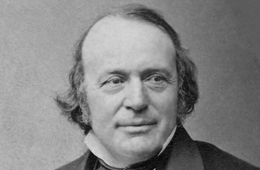
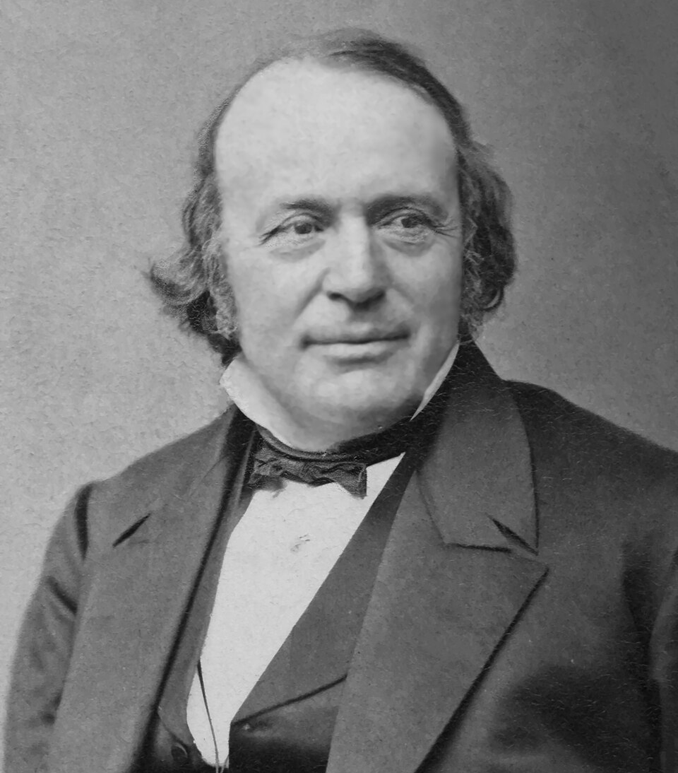
Jean Louis Rodolphe Agassiz
Jean Louis Rodolphe Agassiz was born on 28 May 1807 in the hamlet of Môtier, within the former municipality of Haut-Vully in the Canton of Fribourg, Switzerland, the son of a long line of Protestant clergymen and a mother deeply engaged in her children's education. He was educated at home, then at the college of Bienne and the academy of Lausanne, before beginning formal university studies in medicine at Zürich, Heidelberg, and Munich. His scientific career began unexpectedly when Johann Baptist von Spix died in 1826, leaving unfinished a major collection of Brazilian freshwater fishes gathered during the Spix–Martius expedition of 1819–1820. Carl Friedrich Philipp von Martius entrusted the young Agassiz — then still a medical student — with completing the work. Agassiz published the results in 1829 as Selecta Genera et Species Piscium, a study that established his reputation across Europe. He earned a Doctor of Philosophy at Erlangen (1829) and a Doctor of Medicine at Munich (1830) before moving to Paris to study under Georges Cuvier and Alexander von Humboldt. After Cuvier's death in 1832, Agassiz returned to Switzerland to accept a professorship of natural history at the newly founded University of Neuchâtel, and in 1833 he married Cécile Braun, sister of his close friend Alexander Braun; trained in scientific drawing by her brothers, she illustrated some of the most beautiful plates in his works on fossil and freshwater fishes.
At Neuchâtel, Agassiz launched the monumental Recherches sur les poissons fossiles (1833–1843), a five-volume synthesis that reshaped the study of fossil fishes and secured his standing as one of Europe’s leading naturalists. Yet his most transformative insight came from the landscape itself. In the 1830s he argued that Europe had once been covered by a vast Ice Age — a glacial mantle that carved valleys, transported erratic boulders, and reshaped entire regions. His fieldwork on Swiss glaciers, especially the Unteraar Glacier, convinced him that ice, not catastrophic floods, had sculpted the northern world. Though initially controversial, his glacial theory soon persuaded many geologists and permanently altered the study of Earth’s past.
Agassiz arrived in the United States in 1846 on a lecture tour sponsored by the Lowell Institute, and his clarity, charisma, and theatrical demonstrations made him an instant scientific celebrity. Within a few years he accepted a professorship at Harvard and founded the Museum of Comparative Zoology (1859), an institution he envisioned as a cathedral of natural order. He trained a generation of American naturalists, including Alpheus Hyatt and Nathaniel Shaler, and built the museum in close partnership with Elizabeth Cabot Cary, whom he had met shortly after arriving in Boston. At the time he was still married to Cécile, who remained in Europe; after her death in 1848, Agassiz and Elizabeth married in 1850. She became his collaborator, editor, and later a major educational reformer in her own right, eventually serving as the first president of Radcliffe College.
But Agassiz's intellectual commitments placed him increasingly at odds with the emerging evolutionary worldview. He rejected Darwin's theory of natural selection, insisting instead on a fixed, divinely ordered sequence of creations. His belief in the immutability of species led him to defend polygenism — the claim that human races had separate origins — a theory that was embraced by pro-slavery advocates, anti-abolitionist writers, and defenders of segregation and racial hierarchy, and which modern historians identify as a central component of nineteenth-century scientific racism. Institutions and scholars have since scrutinized this aspect of his work as a powerful example of how scientific authority can be used to reinforce social and political inequality.
Despite these profound flaws, Agassiz's influence on American science was immense. He expanded the reach of fieldwork, championed hands-on teaching, and helped establish the United States as a center for natural history research. His glacial theory reshaped geology; his museum reshaped Harvard; and his students carried his methods — though not always his conclusions — into the twentieth century.
Jean Louis Rodolphe Agassiz died on 14 December 1873 in Cambridge, Massachusetts. He left behind a legacy as complex as the landscapes he studied: a visionary of ice and anatomy, a builder of institutions, a teacher of extraordinary power, and a thinker whose brilliance was inseparable from the limitations of his worldview. His life stands as both a monument and a warning — a reminder that scientific insight and scientific error can coexist in the same formidable mind.
At Neuchâtel, Agassiz launched the monumental Recherches sur les poissons fossiles (1833–1843), a five-volume synthesis that reshaped the study of fossil fishes and secured his standing as one of Europe’s leading naturalists. Yet his most transformative insight came from the landscape itself. In the 1830s he argued that Europe had once been covered by a vast Ice Age — a glacial mantle that carved valleys, transported erratic boulders, and reshaped entire regions. His fieldwork on Swiss glaciers, especially the Unteraar Glacier, convinced him that ice, not catastrophic floods, had sculpted the northern world. Though initially controversial, his glacial theory soon persuaded many geologists and permanently altered the study of Earth’s past.
Agassiz arrived in the United States in 1846 on a lecture tour sponsored by the Lowell Institute, and his clarity, charisma, and theatrical demonstrations made him an instant scientific celebrity. Within a few years he accepted a professorship at Harvard and founded the Museum of Comparative Zoology (1859), an institution he envisioned as a cathedral of natural order. He trained a generation of American naturalists, including Alpheus Hyatt and Nathaniel Shaler, and built the museum in close partnership with Elizabeth Cabot Cary, whom he had met shortly after arriving in Boston. At the time he was still married to Cécile, who remained in Europe; after her death in 1848, Agassiz and Elizabeth married in 1850. She became his collaborator, editor, and later a major educational reformer in her own right, eventually serving as the first president of Radcliffe College.
But Agassiz's intellectual commitments placed him increasingly at odds with the emerging evolutionary worldview. He rejected Darwin's theory of natural selection, insisting instead on a fixed, divinely ordered sequence of creations. His belief in the immutability of species led him to defend polygenism — the claim that human races had separate origins — a theory that was embraced by pro-slavery advocates, anti-abolitionist writers, and defenders of segregation and racial hierarchy, and which modern historians identify as a central component of nineteenth-century scientific racism. Institutions and scholars have since scrutinized this aspect of his work as a powerful example of how scientific authority can be used to reinforce social and political inequality.
Despite these profound flaws, Agassiz's influence on American science was immense. He expanded the reach of fieldwork, championed hands-on teaching, and helped establish the United States as a center for natural history research. His glacial theory reshaped geology; his museum reshaped Harvard; and his students carried his methods — though not always his conclusions — into the twentieth century.
Jean Louis Rodolphe Agassiz died on 14 December 1873 in Cambridge, Massachusetts. He left behind a legacy as complex as the landscapes he studied: a visionary of ice and anatomy, a builder of institutions, a teacher of extraordinary power, and a thinker whose brilliance was inseparable from the limitations of his worldview. His life stands as both a monument and a warning — a reminder that scientific insight and scientific error can coexist in the same formidable mind.
References
• Guyot A (1878) "Memoir of Louis Agassiz, 1807-1873".
• Agassiz ECC (1885) "Louis Agassiz; his life and correspondence". Volume 1 / Volume 2
• Marcou J (1895) "Life, Letters, and Works of Louis Agassiz". Volume 1. / Volume 2.
• Gould SJ (1997) "The mismeasure of man".
• Menand L (2001) "Morton, Agassiz, and the Origins of Scientific Racism in the United States". The Journal of Blacks in Higher Education (34): 110–113. DOI: 10.2307/3134139.
• Stanford University "Jean Louis Rodolphe Agassiz". Hopkins Seaside Laboratory (1892–1917).
Discoveries and descriptions ...
| Name | Type |
|---|


