









Pronunciation: LEH-pee-doos
Meaning: Fascinating
Author/s: Nesbitt and Ezcurra (2015)
Synonyms: None known
First Discovery: Texas, USA
Acta Ordinal: #918
Lepidus praecisio
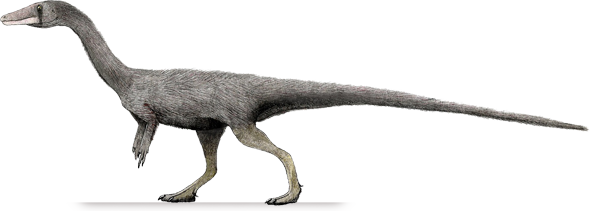
Coelophysis and Tawa aside, nearly the entire record of early dinosaurs from North America consists of fragmentary or isolated limb bones, and those that aren't limb bones are even more fragmentary. Unfortunately, Lepidus doesn't buck that trend because its confirmed fossils amount to the knuckle end of a left lower leg attached to an ankle and heel. It has laid claim to a fragmentary thigh and upper jaw from the same area, too. But, as anyone familiar with the "dry bones" sing-a-long will know, the anklebone ain't connected to the thighbone nor the thighbone to the jawbone, and with so many bits missing from in-between, they can't all be lumped together with any real confidence.
(Fascinating scrap)Etymology
Lepidus means "fascinating" in Latin. The species epithet, praecisio, means "fragment or scrap" in Latin, in reference to the common preservation of early dinosaurs from North America: they are almost entirely represented by bony fragments.
Discovery
The remains of Lepidus were discovered at Dockum Site 7 General (TMM locality 41936) near Signal Peak, just northeast of the classic Otis Chalk localities (Dockum Group), eight miles southeast of Big Spring, Howard County, Texas, by the Works Progress Administration paleontology team during mid-February of 1941. The holotype (TMM 41936-1.3) is the bottom end of a left shin and a calf, attached to an ankle and heel bone.
Referred material includes a section of left thigh bone (TMM 41936-1) and a partial maxilla; the tooth bearing portion of the upper jaw (TMM 41936-1.1).
Preparators
Ronald Tykoski and Sterling J. Nesbitt.


