




Pronunciation: Or-nith-oh-LESS-teez
Meaning: Bird robber
Author/s: Osborne (1903)
Synonyms: Coelurus hermanni (Hay, 1934)
First Discovery: Morrison Formation, USA
Acta Ordinal: #88
Ornitholestes hermanni
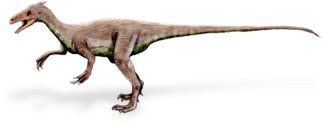
Ornitholestes is known from a single, almost complete skeleton unearthed at Bone Cabin Quarry in North America's embarrassingly fossil-rich Morrison Formation. During the Late Jurassic, this area was dominated by Allosaurus and Ceratosaurus, but they weren't the only predators around, and their respective love of giant sauropods and mid-sized ornithopods from a dining perspective left a nice little niche for the likes of Ornitholestes to exploit.
Although shorter in the hindlimbs than some other small theropods and probably not as fast, Ornitholestes were built for ambushing small vertebrates and pillaging bird's nests (hence the name 'bird-robber') and were probably nippy enough to subsidize their diet with the odd insect. They were equipped with sharp claws, robust jaws, and two types of flesh-tearing teeth that could conceivably kill baby dinosaurs, though perhaps not the apex predator variety. However, that didn't affect their flavour and made them no less appetizing to the parents.
Ornitholestes was once thought to have had a nose horn, but recent analysis has questioned that assumption. Whilst more robust than other small theropods such as Compsognathus and Coelophysis, the only known skull is so battered it's difficult to tell what goes where, and the once-thought horn is likely a smashed nose bone that went astray during fossilization.
Although shorter in the hindlimbs than some other small theropods and probably not as fast, Ornitholestes were built for ambushing small vertebrates and pillaging bird's nests (hence the name 'bird-robber') and were probably nippy enough to subsidize their diet with the odd insect. They were equipped with sharp claws, robust jaws, and two types of flesh-tearing teeth that could conceivably kill baby dinosaurs, though perhaps not the apex predator variety. However, that didn't affect their flavour and made them no less appetizing to the parents.
Ornitholestes was once thought to have had a nose horn, but recent analysis has questioned that assumption. Whilst more robust than other small theropods such as Compsognathus and Coelophysis, the only known skull is so battered it's difficult to tell what goes where, and the once-thought horn is likely a smashed nose bone that went astray during fossilization.
(Hermann's bird robber)Etymology
Ornitholestes is derived from from the Greek "ornis" (bird) and "lestes" (robber), which was suggested by Dr. Theodore Gill.
The species epithet, hermanni, honors American Museum of Natural History preparator Adam Hermann.


