









Pronunciation: lih-SHOO-long
Meaning: Chestnut tree dragon
Author/s: Zhang et al. (2024)
Synonyms: None known
First Discovery: Yunnan Province, China
Acta Ordinal: #1189
Lishulong wangi
China's Lower Jurassic Lufeng Formation has long been recognized for its diverse early-diverging sauropodomorph dinosaurs, with eight genera and ten species (Chuxiongosaurus lufengensis, Gyposaurus sinensis, Jingshanosaurus xinwaensis,
Lufengosaurus huenei and magnus, Yunnanosaurus huangi and robustus, Xingxiulong chengi, Yizhousaurus sunae, and Xixiposaurus suni), plus dubious critters and informal names, accounting for more than half of all the sauropodomorphs known from the ancient continent of Laurasia, as of 2024. Just squeeking in at the tail-end of that year, and being "fashionably late" like all swellheads, was Luishulong to bolster the ranks, and it brought its huge head, the largest amongst all of the cranial material known from the Lufeng, no less, with it.
(Wang's Chestnut Tree Dragon)Etymology
Lishulong is derived from the Chinese "Lishu" (chestnut tree)—after the locality of "Dalishu" (big chestnut tree) where the specimen was found—and "long" (dragon). The species epithet, wangi, honours Mr. Zheng-Ju Wang, for his great contributions to the early discoveries of vertebrate fossils from Lufeng. ZooBank registry: urn:lsid:zoobank.org:act:A1B589CE-0836-4048-B68E-3608F59FE574.
Discovery
The remains of Lishulong were discovered in the Shawan Member of the Lufeng Formation at the Dalishu Locality, near Jiudu Village,
Konglongshan Town (formerly Chuanjie Township), Lufeng County, Yunnan Province, China, by staff of the Bureau of Natural Resources of Lufeng County in Chuxiong. The site is very close to where the earliest Chinese theropod dinosaur, Panguraptor lufengensis, was found.
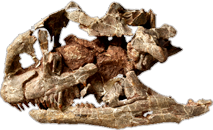
The holotype (LFGT-ZLJ001) is a partial skull and nine neck vertebrae.
Preparators
Tao Wang of the Dinosaur Fossil Conservation and Research Center at the Bureau of Natural Resources of Lufeng County, and staff of the Lufeng World Dinosaur Valley Museum.


