



Date of Birth: January 26, 1884
Place of Birth: Beloit, Wisconsin, USA
Parents: Charles Ezra and Cora Chapman Andrews
Spouse: (1) Yvette Borup, (2) Wilhelmina Christmas
Date of expiry: March 11, 1960 (aged 76)
Place of expiry: Carmel, California, USA
Legacy: Fossil dinosaur eggs
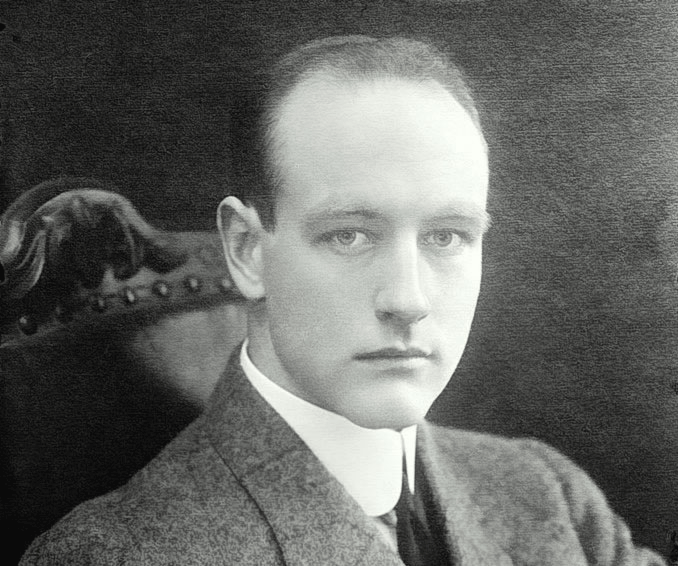
Roy Chapman Andrews
Roy Chapman Andrews was born on 26 January 1884 in Beloit, Wisconsin, a boy who preferred the woods, rivers and guns to any classroom. He taught himself taxidermy and paid his way through Beloit College with the proceeds, already displaying the blend of self-reliance and restless ambition that would define his life. After graduation in 1906 he went straight to the American Museum of Natural History in New York where he was desperate to work, only to be told there were no scientific openings. Andrews simply asked for a broom and worked as janitor in the taxidermy department for two years, eventually graduating from floor duty to field work after completing a master's degree in mammalogy at Columbia University.
His early career unfolded across oceans. Between 1908 and 1914 he sailed on expeditions to Alaska, the Dutch East Indies, Korea, and Japan, studying whales, seals, and other marine mammals. His footage of fur seals from the 1913 Borden Alaska expedition was considered some of the finest ever captured. These years established his reputation as a field naturalist willing to go anywhere, endure anything, and return with specimens, photographs, and stories that electrified museum audiences. In 1914, he married Yvette Borup with whom he had two sons, and together they led the Asiatic Zoological Expedition through Yunnan and other provinces of China from 1916 to 1917, later chronicling their travels in "Camps and Trails in China".
But Andrews' legend was forged in the 1920s, when he turned his attention to Mongolia. Beginning in 1922, he led a fleet of Dodge automobiles—supported by camel caravans—into the Gobi Desert, then one of the least explored regions on Earth. These Central Asiatic Expeditions (1922–1930) braved sandstorms, political unrest, and bandit attacks, yet yielded discoveries that transformed paleontology: the first scientifically recognized dinosaur eggs, fossils of Protoceratops and Velociraptor, early mammals, and the colossal hornless rhinocerotoid Paraceratherium. Along the way he recorded local tales of the Olgoi-Khorkhoi, the so-called Mongolian Death Worm, treating it with amused skepticism but noting it as part of the desert's folklore. On one return from an antelope hunt he even managed to shoot himself in the foot—a mishap reported by cable in the New York Times—and spent days convalescing in the desert under the care of the expedition's surgeon. His exploits made him a global celebrity, landing him on the cover of Time Magazine in 1923, and his swashbuckling style — coupled with a reputed fear of snakes — has prompted many to claim he was an inspiration for the fictional adventurer-scientist Indiana Jones.
Andrews rose steadily within the American Museum, becoming director in 1935 after serving as vice-director and head of Asiatic exploration, and cultivated a public persona that blended science with adventure. He was known for his dramatic storytelling, his fondness for risk, and his ability to secure funding through charismatic public lectures and bestselling books—Across Mongolian Plains, On the Trail of Ancient Man, Ends of the Earth, and his autobiography Under a Lucky Star—that cemented his status as America’s most charismatic scientific explorer. He divorced Yvette in 1930 and married Wilhelmina "Billie" Christmas in 1935, eventually retiring to Connecticut, where he wrote until his death on 11 March 1960 in Carmel, California.
Roy Chapman Andrews lived at a pace few could match: explorer, naturalist, showman, and museum builder. His Gobi expeditions reshaped our understanding of dinosaurs and early mammals, and his larger-than-life persona helped define the public image of the scientific adventurer. Beneath the legend was a man who simply wanted, as he wrote, "to go everywhere"—and who very nearly did.
His early career unfolded across oceans. Between 1908 and 1914 he sailed on expeditions to Alaska, the Dutch East Indies, Korea, and Japan, studying whales, seals, and other marine mammals. His footage of fur seals from the 1913 Borden Alaska expedition was considered some of the finest ever captured. These years established his reputation as a field naturalist willing to go anywhere, endure anything, and return with specimens, photographs, and stories that electrified museum audiences. In 1914, he married Yvette Borup with whom he had two sons, and together they led the Asiatic Zoological Expedition through Yunnan and other provinces of China from 1916 to 1917, later chronicling their travels in "Camps and Trails in China".
But Andrews' legend was forged in the 1920s, when he turned his attention to Mongolia. Beginning in 1922, he led a fleet of Dodge automobiles—supported by camel caravans—into the Gobi Desert, then one of the least explored regions on Earth. These Central Asiatic Expeditions (1922–1930) braved sandstorms, political unrest, and bandit attacks, yet yielded discoveries that transformed paleontology: the first scientifically recognized dinosaur eggs, fossils of Protoceratops and Velociraptor, early mammals, and the colossal hornless rhinocerotoid Paraceratherium. Along the way he recorded local tales of the Olgoi-Khorkhoi, the so-called Mongolian Death Worm, treating it with amused skepticism but noting it as part of the desert's folklore. On one return from an antelope hunt he even managed to shoot himself in the foot—a mishap reported by cable in the New York Times—and spent days convalescing in the desert under the care of the expedition's surgeon. His exploits made him a global celebrity, landing him on the cover of Time Magazine in 1923, and his swashbuckling style — coupled with a reputed fear of snakes — has prompted many to claim he was an inspiration for the fictional adventurer-scientist Indiana Jones.
Andrews rose steadily within the American Museum, becoming director in 1935 after serving as vice-director and head of Asiatic exploration, and cultivated a public persona that blended science with adventure. He was known for his dramatic storytelling, his fondness for risk, and his ability to secure funding through charismatic public lectures and bestselling books—Across Mongolian Plains, On the Trail of Ancient Man, Ends of the Earth, and his autobiography Under a Lucky Star—that cemented his status as America’s most charismatic scientific explorer. He divorced Yvette in 1930 and married Wilhelmina "Billie" Christmas in 1935, eventually retiring to Connecticut, where he wrote until his death on 11 March 1960 in Carmel, California.
Roy Chapman Andrews lived at a pace few could match: explorer, naturalist, showman, and museum builder. His Gobi expeditions reshaped our understanding of dinosaurs and early mammals, and his larger-than-life persona helped define the public image of the scientific adventurer. Beneath the legend was a man who simply wanted, as he wrote, "to go everywhere"—and who very nearly did.
More Andrews
• The New York Times (May 17, 1928) "ANDREWS SHOT IN ACCIDENT; Explorer in Mongolia Wounded by His Own Pistol".
• Andrews RC (1943) "Under A Lucky Star - A Lifetime Of Adventure".
• Colbert EH (1968) "Men And Dinosaurs: The Search in Field and Laboratory".
• The New York Times (March 12, 1960) "Dr. Roy Chapman Andrews, explorer and naturalist, died here tonight of a heart attack at Peninsula Community Hospital. He was 76 years old".
• Bausum A (2000) "Dragon Bones and Dinosaur Eggs: A Photobiography
of Explorer Roy Chapman Andrews".
• Bausum A (2009) "Roy Chapman Andrews: Beloit's Real-Life Indiana Jones". Northwest Quarterly.
• Dingus L and Norell MA (2012) "The Dinosaur Hunters: The Extraordinary Story of the Discovery of Prehistoric Life".

Discoveries and descriptions ...
| Name | Type |
|---|---|
| OVIRAPTOR |  |
| PROTOCERATOPS |  |
| SARCOSAURUS | |


