








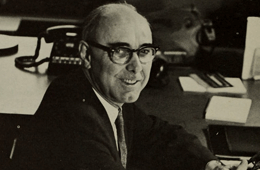
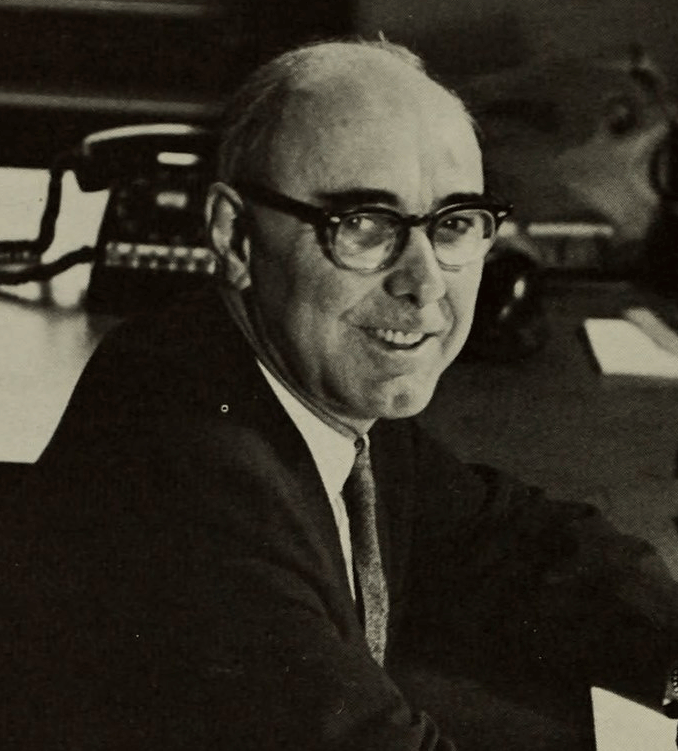
Date of Birth: September 28, 1905
Place of Birth: Clarinda, Iowa, USA
Parents: George Harris and Mary Adamson Colbert
Spouse: Margaret Matthew (married in 1933)
Died: November 15, 2001
Place of death: Flagstaff, Arizona
Legacy: Ghost Ranch bone beds, Staurikosaurus pricei,
the popularization of paleontology
the popularization of paleontology
Edwin "Ned" Harris Colbert
Edwin Harris Colbert was born on 28 September 1905 in Clarinda, Iowa, the youngest of three sons in a family that prized learning and steady intellectual work. His father, George Harris Colbert, was a school superintendent and later a mathematics professor, and the family moved to Maryville, Missouri when Ned was still an infant. Although he first imagined a career in forestry, fossils won out: he earned his A.B. at the University of Nebraska and then his M.A. and Ph.D. at Columbia University, completing his doctorate in 1935. In 1930, he joined the American Museum of Natural History as a research assistant, beginning what would become a forty-year tenure that shaped both the institution and the field of vertebrate paleontology. It was there, amid the museum’s fossil halls and preparation labs, that he met Margaret Matthew, daughter of the eminent paleontologist William Diller Matthew, who had been hired as a bone artist in 1931. Their shared professional world quickly became a personal one, and in 1933 — the same year Colbert was promoted to Assistant Curator — the two married. Margaret would become a celebrated illustrator and sculpter of extinct life and, in practice if not in title, a scientific partner whose drawings, reconstructions, and quiet expertise threaded through much of Colbert's published work.
Colbert's professional life blended scholarship with a kind of quiet showmanship, but he had little patience for the politics that swirled around major museums. He craved doing science more than jockeying for influence, never understanding why some scientists — and perhaps he was thinking of his mentor Henry Fairfield Osborn, whom he variously described as tyrannical, imperious, pompous, vain, and tactless — "lusted for power and position". In Colbert’s view, "the people who are truly remembered are the scholars", and he lived accordingly: in the field, in the collections, and at his typewriter. World War II upended his life in unexpected ways. Though not drafted, he served as a civilian air-raid warden in Leonia, New Jersey, and in 1942 he replaced Barnum Brown as the museum’s acting curator of amphibians and reptiles, receiving the full Curator title the following year. The shift marked the beginning of his long stewardship of the AMNH’s vertebrate paleontology program.
His fieldwork ranged across the American West, South Africa, India, Brazil, Israel, and Antarctica — in fact, he ultimately collected fossils on all seven continents. At Ghost Ranch, New Mexico, he uncovered one of the richest dinosaur bonebeds ever found, yielding dozens of skeletons of Coelophysis and transforming understanding of Triassic ecosystems. In 1969 he made his most celebrated geological discovery: Lystrosaurus fossils in Antarctica, a find that helped cement the theory of continental drift. His systematic work ranged widely, from Siwalik mammals — the subject of his 1935 Ph.D. thesis, which earned him the National Academy of Sciences’ Daniel Giraud Elliot Medal for "meritorious work in zoology or paleontology" — to Triassic reptiles, including the first naming of Staurikosaurus. Over the course of his career he published more than 400 research papers, a scholarly output that would have impressed even the empire-builders he quietly disdained.
Yet Colbert's greatest legacy may have been his ability to make paleontology feel alive. He was renowned for communicating science to the general public in a way they would not just understand but embrace. His textbooks and popular works — The Dinosaur Book, Men and Dinosaurs, Evolution of the Vertebrates — shaped the imaginations of generations, and his museum exhibits helped carry dinosaurs from the lumbering behemoths of Osborn’s era toward the more dynamic, bird-like creatures that would define the Dinosaur Renaissance. He wrote with warmth, clarity, and a sense of adventure, blending the romance of field camps and deep time with the precision of a seasoned anatomist. In 1955, he was the first to suggest that Pachycephalosaurs' thick skulls may have been used as battering rams.
Colbert retired from the AMNH in 1970 and moved to the Museum of Northern Arizona, where he continued to publish, teach, and mentor until his death in 2001. He remained, to the end, a field man at heart — the sort who could still give a complete lecture from a hospital bed in his final days. Beneath the gentle manner and encyclopedic knowledge was a scientist who helped carry vertebrate paleontology across one of its great transitions, from the age of museum titans to the modern era of evolutionary biology. His legacy endures in the bones he uncovered, the books he wrote, and the countless students and readers who first met the deep past through his eyes.
In 1998, the theropod dinosaur Nedcolbertia was named in his honour.
Colbert's professional life blended scholarship with a kind of quiet showmanship, but he had little patience for the politics that swirled around major museums. He craved doing science more than jockeying for influence, never understanding why some scientists — and perhaps he was thinking of his mentor Henry Fairfield Osborn, whom he variously described as tyrannical, imperious, pompous, vain, and tactless — "lusted for power and position". In Colbert’s view, "the people who are truly remembered are the scholars", and he lived accordingly: in the field, in the collections, and at his typewriter. World War II upended his life in unexpected ways. Though not drafted, he served as a civilian air-raid warden in Leonia, New Jersey, and in 1942 he replaced Barnum Brown as the museum’s acting curator of amphibians and reptiles, receiving the full Curator title the following year. The shift marked the beginning of his long stewardship of the AMNH’s vertebrate paleontology program.
His fieldwork ranged across the American West, South Africa, India, Brazil, Israel, and Antarctica — in fact, he ultimately collected fossils on all seven continents. At Ghost Ranch, New Mexico, he uncovered one of the richest dinosaur bonebeds ever found, yielding dozens of skeletons of Coelophysis and transforming understanding of Triassic ecosystems. In 1969 he made his most celebrated geological discovery: Lystrosaurus fossils in Antarctica, a find that helped cement the theory of continental drift. His systematic work ranged widely, from Siwalik mammals — the subject of his 1935 Ph.D. thesis, which earned him the National Academy of Sciences’ Daniel Giraud Elliot Medal for "meritorious work in zoology or paleontology" — to Triassic reptiles, including the first naming of Staurikosaurus. Over the course of his career he published more than 400 research papers, a scholarly output that would have impressed even the empire-builders he quietly disdained.
Yet Colbert's greatest legacy may have been his ability to make paleontology feel alive. He was renowned for communicating science to the general public in a way they would not just understand but embrace. His textbooks and popular works — The Dinosaur Book, Men and Dinosaurs, Evolution of the Vertebrates — shaped the imaginations of generations, and his museum exhibits helped carry dinosaurs from the lumbering behemoths of Osborn’s era toward the more dynamic, bird-like creatures that would define the Dinosaur Renaissance. He wrote with warmth, clarity, and a sense of adventure, blending the romance of field camps and deep time with the precision of a seasoned anatomist. In 1955, he was the first to suggest that Pachycephalosaurs' thick skulls may have been used as battering rams.
Colbert retired from the AMNH in 1970 and moved to the Museum of Northern Arizona, where he continued to publish, teach, and mentor until his death in 2001. He remained, to the end, a field man at heart — the sort who could still give a complete lecture from a hospital bed in his final days. Beneath the gentle manner and encyclopedic knowledge was a scientist who helped carry vertebrate paleontology across one of its great transitions, from the age of museum titans to the modern era of evolutionary biology. His legacy endures in the bones he uncovered, the books he wrote, and the countless students and readers who first met the deep past through his eyes.
In 1998, the theropod dinosaur Nedcolbertia was named in his honour.
References
• Colbert EH (1955) "Evolution of the vertebrates". Wiley, New York.
• Colbert EH (1968) "Men And Dinosaurs: The Search in Field and Laboratory".
• Colbert EH (1989) ""Digging into the Past: An Autobiography".
• Elliot AB (2000) "Charming the bones: a portrait of Margaret Matthew Colbert".
• Colbert EH, Morales M and Minkoff EC (2001) "Colbert's Evolution of the Vertebrates: A History of the Backboned Animals Through Time".
• Brusatte SL (2023) "Biographical Memoirs: Edwin Harris Colbert". National Academy of Sciences.
Discoveries and descriptions ...
| Name | Type |
|---|---|
| SCUTELLOSAURUS |  |
| STAURIKOSAURUS |  |


