








Date of Birth: February 12, 1809
Place of Birth: Shrewsbury, Shropshire, England
Parents: Robert Darwin and Susannah Darwin, née Wedgwood
Spouse: Emma Wedgwood (his cousin)
Date of expiry: April 19, 1882 (aged 73)
Place of expiry: Downe, Kent, England
Legacy: The theory of evolution
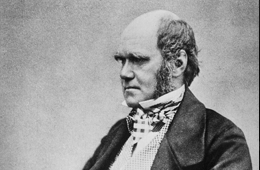
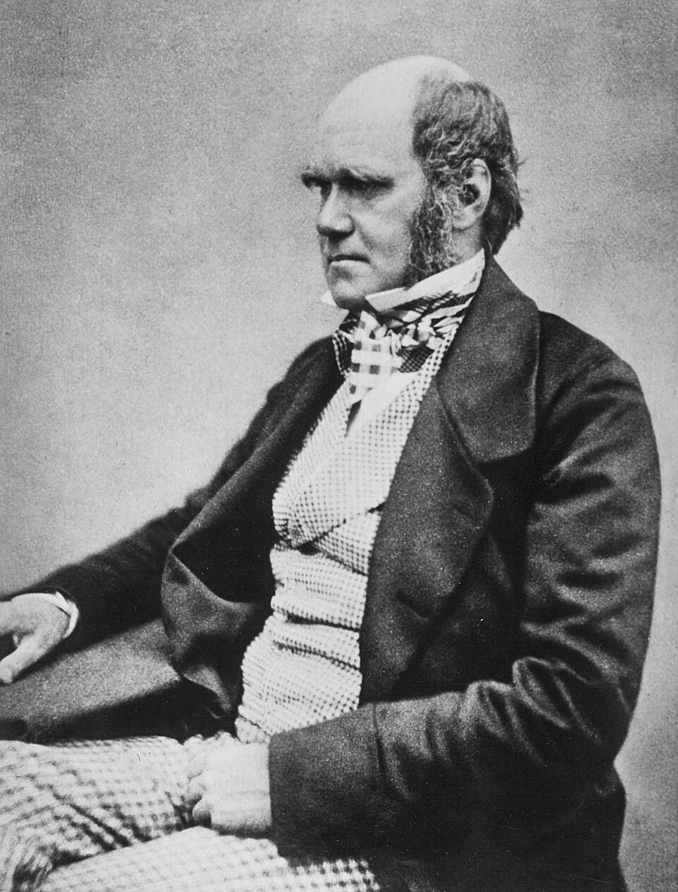
Charles Robert Darwin
Charles Robert Darwin was born on 12 February 1809 in Shrewsbury, Shropshire, into a prosperous family of physicians and industrialists. His early fascination with the natural world was unmistakable: he collected insects, minerals, and shells, and spent long hours exploring the countryside around his home. Though his father sent him to the University of Edinburgh in 1825 to study medicine, Darwin found the lectures dull and the surgeries horrifying; instead, he gravitated toward natural history, studying marine invertebrates with Robert Edmond Grant.
In 1828 he transferred to Christ's College, Cambridge, nominally to prepare for the clergy, but his true education came from botanist John Stevens Henslow, who encouraged his scientific curiosity. It was Henslow who recommended Darwin for the position of gentleman-naturalist aboard HMS Beagle. The five-year voyage (1831–1836) transformed him. Darwin explored South America, the Galápagos, and other remote regions, collecting plants, animals, fossils, and geological specimens. His meticulous notes and observations — from finch beaks to uplifted coastlines — provided the empirical foundation for a new understanding of life's diversity.
After returning to England, Darwin spent years analyzing his collections, corresponding with experts, and quietly developing a radical idea: that species change over time through a process he called natural selection. Influenced by Thomas Malthus's writings on population pressure, Darwin realized that individuals with advantageous traits survive and reproduce more successfully, gradually shaping entire species.
In 1859 he published On the Origin of Species, a book that revolutionized biology. Though controversial — especially among religious authorities — it convinced many scientists that evolution was real and that Earth was far older than previously believed. Darwin continued refining his ideas in later works, including The Descent of Man and The Expression of the Emotions in Man and Animals, extending evolutionary principles to human origins and behavior.
Darwin's rise also brought conflict. His former collaborator Richard Owen, Britain's most powerful anatomist, turned sharply against Origin and attacked Darwin's theory in print and in private. Owen coached critics, challenged Darwin's priority, and attempted to undermine natural selection by asserting human anatomical uniqueness. Into this stepped Thomas Henry Huxley, the brilliant young anatomist who became Darwin's fiercest defender. In the celebrated 1860 Oxford exchange—where Bishop Samuel Wilberforce, armed with Owen's arguments, mocked the idea of human–ape kinship—Huxley answered with cutting clarity, publicly dismantling Owen's claims about the primate brain and establishing himself as "Darwin's bulldog", the champion who met Owen's authority with sharper evidence and sharper wit.
Darwin's influence extended far beyond evolutionary theory. His research in geology, botany, biogeography, and invertebrate zoology was groundbreaking, and his writings shaped debates in philosophy, psychology, anthropology, and theology. Modern evolutionary biology still rests on the framework he established, even as genetics and molecular biology have expanded it.
Charles Darwin died on 19 April 1882 at his home in Downe, Kent, and was buried in Westminster Abbey — an honour reserved for Britain's most distinguished figures. His legacy endures in every field that seeks to understand life, its origins, and its astonishing diversity.
In 1828 he transferred to Christ's College, Cambridge, nominally to prepare for the clergy, but his true education came from botanist John Stevens Henslow, who encouraged his scientific curiosity. It was Henslow who recommended Darwin for the position of gentleman-naturalist aboard HMS Beagle. The five-year voyage (1831–1836) transformed him. Darwin explored South America, the Galápagos, and other remote regions, collecting plants, animals, fossils, and geological specimens. His meticulous notes and observations — from finch beaks to uplifted coastlines — provided the empirical foundation for a new understanding of life's diversity.
After returning to England, Darwin spent years analyzing his collections, corresponding with experts, and quietly developing a radical idea: that species change over time through a process he called natural selection. Influenced by Thomas Malthus's writings on population pressure, Darwin realized that individuals with advantageous traits survive and reproduce more successfully, gradually shaping entire species.
In 1859 he published On the Origin of Species, a book that revolutionized biology. Though controversial — especially among religious authorities — it convinced many scientists that evolution was real and that Earth was far older than previously believed. Darwin continued refining his ideas in later works, including The Descent of Man and The Expression of the Emotions in Man and Animals, extending evolutionary principles to human origins and behavior.
Darwin's rise also brought conflict. His former collaborator Richard Owen, Britain's most powerful anatomist, turned sharply against Origin and attacked Darwin's theory in print and in private. Owen coached critics, challenged Darwin's priority, and attempted to undermine natural selection by asserting human anatomical uniqueness. Into this stepped Thomas Henry Huxley, the brilliant young anatomist who became Darwin's fiercest defender. In the celebrated 1860 Oxford exchange—where Bishop Samuel Wilberforce, armed with Owen's arguments, mocked the idea of human–ape kinship—Huxley answered with cutting clarity, publicly dismantling Owen's claims about the primate brain and establishing himself as "Darwin's bulldog", the champion who met Owen's authority with sharper evidence and sharper wit.
Darwin's influence extended far beyond evolutionary theory. His research in geology, botany, biogeography, and invertebrate zoology was groundbreaking, and his writings shaped debates in philosophy, psychology, anthropology, and theology. Modern evolutionary biology still rests on the framework he established, even as genetics and molecular biology have expanded it.
Charles Darwin died on 19 April 1882 at his home in Downe, Kent, and was buried in Westminster Abbey — an honour reserved for Britain's most distinguished figures. His legacy endures in every field that seeks to understand life, its origins, and its astonishing diversity.
More Darwin
• Darwin CR and Wilson EO (2005) "From So Simple a Beginning: Darwin's Four Great Books (Voyage of the Beagle, The Origin of Species, The Descent of Man, The Expression of Emotions in Man and Animals)."
• Berra TM (2008) "Charles Darwin: The Concise Story of an Extraordinary Man."
• Ollerton J, Chancellor G and Van Wyhe J (2012) "John Tweedie and Charles Darwin in Buenos Aires".
• Van Wyhe J (2002) "The Complete Work of Charles Darwin Online".
• Oxford University Museum of Natural History. "The Great Debate".
• "Darwin Online".
Discoveries and descriptions ...
| Name | Type |
|---|


