








Date of Birth: February 19, 1871
Place of Birth: Saint John, New Brunswick, Canada
Parents: George Frederick Matthew and Katherine Diller
Spouse: Kate Lee (m. July 15, 1905)
Date of expiry: September 24, 1930 (aged 59)
Place of expiry: Berkeley, California, USA
Legacy: a coherent evolutionary framework for fossil mammals
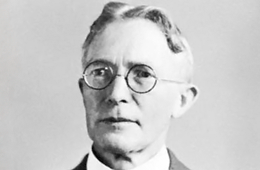
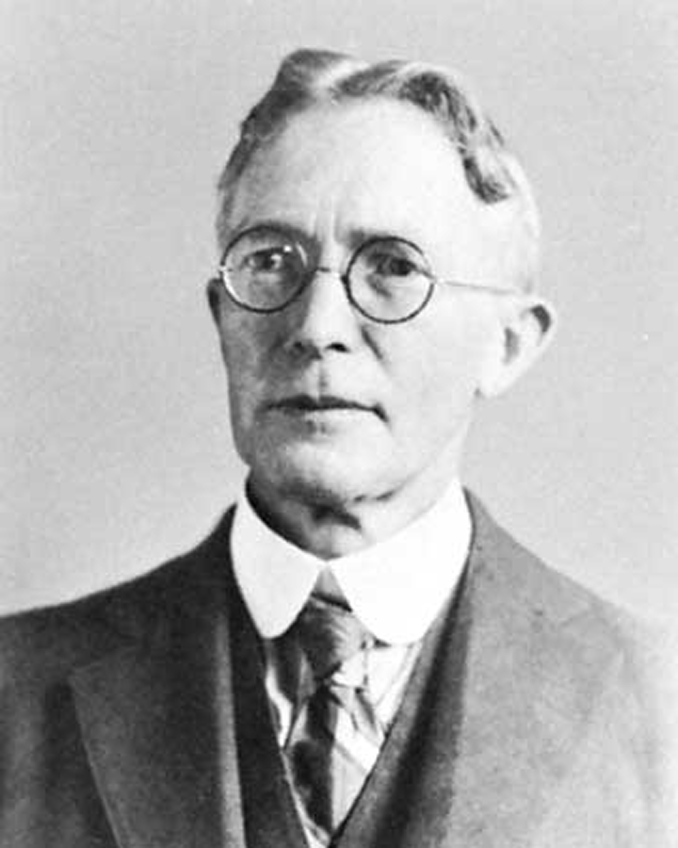
William Diller Matthew
William Diller Matthew was born on 19 February 1871 in Saint John, New Brunswick, the son of George Frederic Matthew, an accomplished amateur geologist and paleontologist whose collecting, field excursions, and published notes instilled in him an early and abiding fascination with the earth sciences. From childhood he absorbed the habits of close observation and geological reasoning, a foundation that would shape his entire intellectual life. After studying geology and zoology at the University of New Brunswick, he moved to New York for graduate work at Columbia, where the American Museum of Natural History was rapidly becoming a center of vertebrate paleontology.
In 1895 he joined the museum as an assistant in the Department of Vertebrate Paleontology, beginning his career under the immediate direction of Dr. J. L. Wortman, who oversaw much of the department’s day-to-day scientific and preparatory work. Almost at once, Henry Fairfield Osborn sent him to Philadelphia to examine, sort, catalogue and pack the vast fossil collection of Edward Drinker Cope, which had been purchased by the museum as a gift of the trustees. As a result, Mathew was introduced to sauropod fossils, and gained the first-hand knowledge that would serve him so well in his later popular articles on these collosal creatures.
Matthew’s early scientific work focused primarily on the fossil mammals of the American West — horses, camels, rhinocerotoids, and the diverse ungulate faunas of the Eocene and Oligocene. Yet his first publications reveal a broader scientific apprenticeship: papers on mineralogy, petrological geology, botany, and trilobites, reflecting his initial grounding in the hard sciences before his decisive turn toward vertebrate paleontology. As his career developed, Matthew became known for combining meticulous anatomical description with a sweeping evolutionary vision, tracing the transformation of limbs, teeth, and body plans across millions of years. He was among the first to argue that mammalian evolution was shaped by shifting ecological zones and continental-scale migrations — a perspective he formalized in his influential 1915 essay "Climate and Evolution".
In that work, Matthew advanced the idea that evolutionary “centers of origin” were tied to stable climatic regions, with dispersal radiating outward as environments changed. This framework extended beyond mammals: Matthew believed that the first humans originated in Asia, particularly in the highlands of central Asia, which he saw as a cradle of evolutionary innovation. Though later research would revise many of these conclusions, his climatic-evolutionary model profoundly influenced early twentieth-century biogeography and remains a landmark in the history of evolutionary thought.
Within the American Museum, Matthew rose steadily through the ranks, becoming curator of vertebrate paleontology in 1911. He played a central role in organizing the museum’s vast collections, mentoring younger researchers, and shaping the institution’s scientific identity. His fieldwork took him across the badlands of Wyoming, Montana, and South Dakota, where he collaborated with collectors such as Walter Granger and Barnum Brown, but his scientific travels ranged far more widely. Matthew undertook reconnaissance in Canada, journeyed through Central Asia, and spent long periods in the museums of London, Paris, Berlin, and Vienna, examining type specimens and refining his phylogenetic frameworks. By the late 1920s he had gained, in the words of his colleague D. M. S. Watson, "an unparalleled rank both in the range and intensity of his knowledge", grounded in firsthand study of fossil mammalia across much of the world, but his intellectual range extended far beyond mammals: he wrote on dinosaurs, reptiles, and the broader patterns of vertebrate evolution, always with an eye toward synthesis. His papers reveal a mind drawn to order — to the construction of genealogies, the mapping of migrations, and the search for underlying principles in the fossil record.
In 1927 Matthew left New York for California, accepting a position at the University of California and later joining the staff of the California Institute of Technology. The move reflected both personal restlessness and a desire for new intellectual landscapes. In the West he continued his research on mammalian evolution, contributed to the study of Pleistocene faunas, and remained an influential voice in debates over biogeography and phylogeny.
Matthew's family life intersected quietly but meaningfully with the history of American paleontology. His daughter Margaret Matthew, trained as an artist and sculpter, joined the American Museum of Natural History in the early 1930s as a bone illustrator, where her precise drawings and reconstructions quickly earned admiration. It was there that she met Edwin Harris "Ned" Colbert, a young vertebrate paleontologist rising through the museum’s ranks. Their marriage in 1933 linked two generations of AMNH scholarship, and Margaret would go on to become a celebrated illustrator of extinct life — a scientific partner to Colbert in all but name.
William Diller Matthew died on 24 September 1930 in Berkeley, California, after an illness of roughly four months. He had returned to the American Museum that July, apparently fit and in good spirits, intending to complete his final memoir on the Paleocene mammalia and to celebrate the twenty-fifth anniversary of his marriage to Kate Lee, with whom he had two daughters and a son. But symptoms that had first appeared in May recurred with unexpected severity, and a New York physician urged his immediate return to California. There followed a series of operations described at the time as “of the most grave nature", and despite every effort he declined rapidly. His death, sudden in its finality and occurring when his intellectual powers were at their height, deprived vertebrate paleontology of one of its clearest thinkers and most disciplined systematists. His legacy endures in the rigor of his scholarship, the breadth of his evolutionary vision, and the intellectual architecture he helped build within American paleontology.
In 1919, he was elected a fellow of the Royal Society of Great Britain and the National Academy of Sciences in America, a simultaneous and double honour never achieved in a single year before. However, the latter was invalidated because of his Canadian nationality.
In 1895 he joined the museum as an assistant in the Department of Vertebrate Paleontology, beginning his career under the immediate direction of Dr. J. L. Wortman, who oversaw much of the department’s day-to-day scientific and preparatory work. Almost at once, Henry Fairfield Osborn sent him to Philadelphia to examine, sort, catalogue and pack the vast fossil collection of Edward Drinker Cope, which had been purchased by the museum as a gift of the trustees. As a result, Mathew was introduced to sauropod fossils, and gained the first-hand knowledge that would serve him so well in his later popular articles on these collosal creatures.
Matthew’s early scientific work focused primarily on the fossil mammals of the American West — horses, camels, rhinocerotoids, and the diverse ungulate faunas of the Eocene and Oligocene. Yet his first publications reveal a broader scientific apprenticeship: papers on mineralogy, petrological geology, botany, and trilobites, reflecting his initial grounding in the hard sciences before his decisive turn toward vertebrate paleontology. As his career developed, Matthew became known for combining meticulous anatomical description with a sweeping evolutionary vision, tracing the transformation of limbs, teeth, and body plans across millions of years. He was among the first to argue that mammalian evolution was shaped by shifting ecological zones and continental-scale migrations — a perspective he formalized in his influential 1915 essay "Climate and Evolution".
In that work, Matthew advanced the idea that evolutionary “centers of origin” were tied to stable climatic regions, with dispersal radiating outward as environments changed. This framework extended beyond mammals: Matthew believed that the first humans originated in Asia, particularly in the highlands of central Asia, which he saw as a cradle of evolutionary innovation. Though later research would revise many of these conclusions, his climatic-evolutionary model profoundly influenced early twentieth-century biogeography and remains a landmark in the history of evolutionary thought.
Within the American Museum, Matthew rose steadily through the ranks, becoming curator of vertebrate paleontology in 1911. He played a central role in organizing the museum’s vast collections, mentoring younger researchers, and shaping the institution’s scientific identity. His fieldwork took him across the badlands of Wyoming, Montana, and South Dakota, where he collaborated with collectors such as Walter Granger and Barnum Brown, but his scientific travels ranged far more widely. Matthew undertook reconnaissance in Canada, journeyed through Central Asia, and spent long periods in the museums of London, Paris, Berlin, and Vienna, examining type specimens and refining his phylogenetic frameworks. By the late 1920s he had gained, in the words of his colleague D. M. S. Watson, "an unparalleled rank both in the range and intensity of his knowledge", grounded in firsthand study of fossil mammalia across much of the world, but his intellectual range extended far beyond mammals: he wrote on dinosaurs, reptiles, and the broader patterns of vertebrate evolution, always with an eye toward synthesis. His papers reveal a mind drawn to order — to the construction of genealogies, the mapping of migrations, and the search for underlying principles in the fossil record.
In 1927 Matthew left New York for California, accepting a position at the University of California and later joining the staff of the California Institute of Technology. The move reflected both personal restlessness and a desire for new intellectual landscapes. In the West he continued his research on mammalian evolution, contributed to the study of Pleistocene faunas, and remained an influential voice in debates over biogeography and phylogeny.
Matthew's family life intersected quietly but meaningfully with the history of American paleontology. His daughter Margaret Matthew, trained as an artist and sculpter, joined the American Museum of Natural History in the early 1930s as a bone illustrator, where her precise drawings and reconstructions quickly earned admiration. It was there that she met Edwin Harris "Ned" Colbert, a young vertebrate paleontologist rising through the museum’s ranks. Their marriage in 1933 linked two generations of AMNH scholarship, and Margaret would go on to become a celebrated illustrator of extinct life — a scientific partner to Colbert in all but name.
William Diller Matthew died on 24 September 1930 in Berkeley, California, after an illness of roughly four months. He had returned to the American Museum that July, apparently fit and in good spirits, intending to complete his final memoir on the Paleocene mammalia and to celebrate the twenty-fifth anniversary of his marriage to Kate Lee, with whom he had two daughters and a son. But symptoms that had first appeared in May recurred with unexpected severity, and a New York physician urged his immediate return to California. There followed a series of operations described at the time as “of the most grave nature", and despite every effort he declined rapidly. His death, sudden in its finality and occurring when his intellectual powers were at their height, deprived vertebrate paleontology of one of its clearest thinkers and most disciplined systematists. His legacy endures in the rigor of his scholarship, the breadth of his evolutionary vision, and the intellectual architecture he helped build within American paleontology.
In 1919, he was elected a fellow of the Royal Society of Great Britain and the National Academy of Sciences in America, a simultaneous and double honour never achieved in a single year before. However, the latter was invalidated because of his Canadian nationality.
References
• Matthew WD (1915) "Climate and Evolution". Annals of the New York Academy of Sciences, 24(1): 171–318. DOI: 10.1111/j.1749-6632.1914.tb55346.x.
• Schuchert C (December, 1930) "William Diller Matthew, February 19, 1871, to September 24, 1930". American Journal of Science, 29: 484.
•
Osborn HF (1931) "Memorial of William Diller Mathew". Bulletin of the Geological Society of America, 42: 55-95.
• Gregory WK (1931) "A review of William Diller Matthew's contributions to mammalian palaeontology". American Museum Novitates, No. 473.
• Watson DMS (1932) "William Diller Matthew. 1871–1930". Obituary Notices of Fellows of the Royal Society, 1: 71-74. DOI: 10.1098/rsbm.1932.0015.
• Colbert EH (1992) "William Diller Matthew, paleontologist: the splendid drama observed".
• Linda Hall Library (2025) "Scientist of the Day - William Diller Matthew".

Discoveries and descriptions ...
| Name | Type |
|---|---|
| DROMAEOSAURUS |  |


