



Date of Birth: July 20, 1804
Place of Birth: Lancaster, England
Parents: Richard Owen and Catherine Parrin
Spouse: Caroline Amelia Clift
Date of death: December 18, 1892
Place of death: Richmond Park, London, England
Legacy:Coined Dinosauria
Founded The Natural History Museum (London)
Founded The Natural History Museum (London)
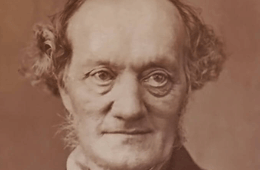
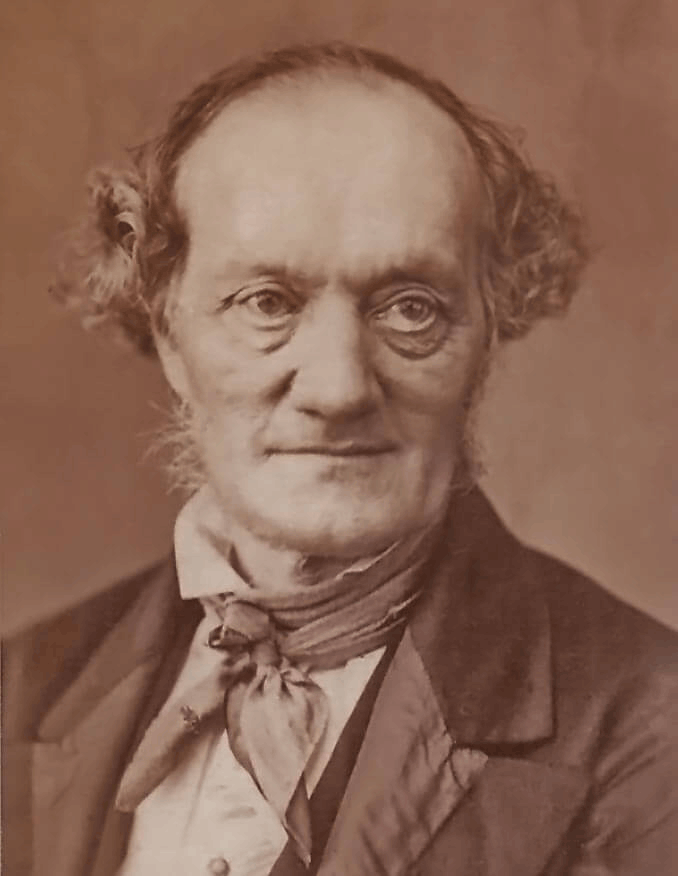
Sir Richard Owen
Richard Owen was born on 20 July 1804 in Lancaster, England, and grew up in a moderately prosperous household, though his father died aged 54 (December 1754—October 1909), when Owen was just five years old. He spent a brief and ill‑fitting stint in midshipman training before abandoning that path in favour of a surgical apprenticeship, where his interest in anatomy deepened. Owen went on to study at the University of Edinburgh and later at St Bartholomew's Hospital in London, receiving the rigorous medical and anatomical training that shaped his early career. His marriage to Caroline Clift, daughter of William Clift—the Hunterian Museum's conservator, whom Owen would eventually succeed—further connected him to the scientific and curatorial world that would define his professional life.
Owen was famously brilliant and equally infamous for his contentious personality that many contemporaries described as malicious, spiteful, and arrogantly self‑promoting. He cultivated a reputation for claiming undue credit and manipulating institutional power to undermine rivals, earning accusations of plagiarism, professional jealousy, and a pattern of feuds that spilt into the public eye. His most famous conflict was with Charles Darwin, whose theory of evolution by natural selection Owen vehemently opposed after years of private hostility, despite initially supporting his early work on barnacles. He also clashed with Thomas Henry Huxley, "Darwin's Bulldog", who denounced Owen's intellectual dishonesty and elitism, sparking one of Victorian science's most enduring feuds. Owen's possessiveness over specimens, authoritarian management style, and remarkable ability for alienating colleagues eventually led to his removal as superintendent of the British Museum (Natural History)—the very institution he had fought to establish, where disputes with staff and trustees made his position untenable. In a final twist of historical irony, the museum replaced Owen's statue in its main hall with one of Darwin in 2009, a symbolic reversal that neatly captures the long‑term reputational fortunes of the two men.
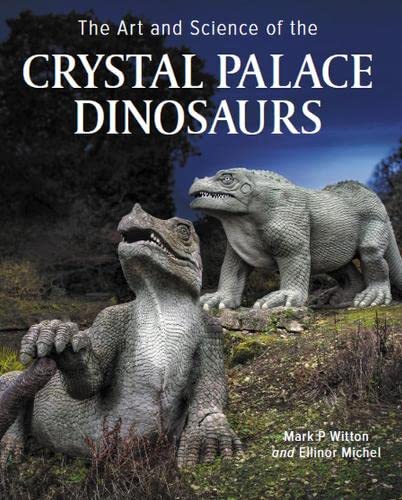
Owen's scientific imprint is immense: he coined "Dinosauria" in 1842, defining dinosaurs as a distinct group of fossil reptiles based on shared anatomical traits. As a comparative anatomist and prolific science writer, he produced foundational work on both living and extinct vertebrates, cataloguing vast collections at the Royal College of Surgeons and the British Museum, where he served as its first director. Beyond anatomy, Owen also contributed to Victorian public-health reform, conducting sanitary investigations for the Health of Towns Commission and reporting on the conditions of industrial communities such as Lancaster. The life-size Crystal Palace dinosaurs, sculpted by Benjamin Waterhouse Hawkins in Owen's vision, helped popularise prehistoric life for the Victorian public, although we now recognise—just as Gideon Mantell, who also felt the whip of Owen's spite, had suspected—that they were highly inaccurate. Despite his controversial reputation, Owen's contributions to taxonomy, museum curation, public health, and vertebrate anatomy secured his place as one of the most influential figures in nineteenth-century science.
Owen was famously brilliant and equally infamous for his contentious personality that many contemporaries described as malicious, spiteful, and arrogantly self‑promoting. He cultivated a reputation for claiming undue credit and manipulating institutional power to undermine rivals, earning accusations of plagiarism, professional jealousy, and a pattern of feuds that spilt into the public eye. His most famous conflict was with Charles Darwin, whose theory of evolution by natural selection Owen vehemently opposed after years of private hostility, despite initially supporting his early work on barnacles. He also clashed with Thomas Henry Huxley, "Darwin's Bulldog", who denounced Owen's intellectual dishonesty and elitism, sparking one of Victorian science's most enduring feuds. Owen's possessiveness over specimens, authoritarian management style, and remarkable ability for alienating colleagues eventually led to his removal as superintendent of the British Museum (Natural History)—the very institution he had fought to establish, where disputes with staff and trustees made his position untenable. In a final twist of historical irony, the museum replaced Owen's statue in its main hall with one of Darwin in 2009, a symbolic reversal that neatly captures the long‑term reputational fortunes of the two men.
Owen's scientific imprint is immense: he coined "Dinosauria" in 1842, defining dinosaurs as a distinct group of fossil reptiles based on shared anatomical traits. As a comparative anatomist and prolific science writer, he produced foundational work on both living and extinct vertebrates, cataloguing vast collections at the Royal College of Surgeons and the British Museum, where he served as its first director. Beyond anatomy, Owen also contributed to Victorian public-health reform, conducting sanitary investigations for the Health of Towns Commission and reporting on the conditions of industrial communities such as Lancaster. The life-size Crystal Palace dinosaurs, sculpted by Benjamin Waterhouse Hawkins in Owen's vision, helped popularise prehistoric life for the Victorian public, although we now recognise—just as Gideon Mantell, who also felt the whip of Owen's spite, had suspected—that they were highly inaccurate. Despite his controversial reputation, Owen's contributions to taxonomy, museum curation, public health, and vertebrate anatomy secured his place as one of the most influential figures in nineteenth-century science.
References
• Owen R (1841) "Report on British Fossil Reptiles. Part II". Report of the British Association for the Advancement of Science, 11: 60-204. [Page 103. Coins Dinosauria.]
• Huxley TH (1861) "On the zoological relations of man with the lower animals". Natural History Review, 2(1): 67-84.
• Rohrer CWG (1911) "Sir Richard Owen: his life and works".
• Rupke NA (1994) "Richard Owen: Victorian Naturalist".
• Murray E (2004) "London's Dinosaurs". Rock and Gem, 34(11): 60-63.
• Cosans CE (2009) "Owen's Ape & Darwin's Bulldog: Beyond Darwinism and Creationism".
• The Natural History Museum, Library and Archives, "The Richard Owen collection".
Discoveries and descriptions ...


