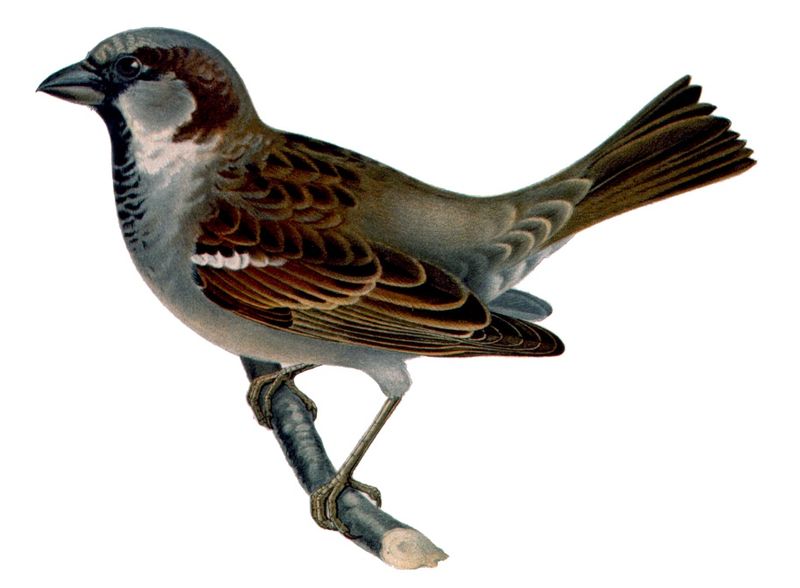
Pronunciation: AY-vee-uh-lay
Author: Jacques Armand Gauthier
Year: 1986
Meaning: Bird wings (see etymology)
Locomotion: Bipedal (two legs)
Synonyms: None known
[Xu et al., 2011]Definition
The most-inclusive clade containing Passer domesticus (house sparrow) but not Dromaeosaurus albertensis or Troodon formosus.
About
Avialae includes all dinosaurs more closely related to modern birds than to deinonychosaurs. The group shows up in the Late Jurassic, with Archaeopteryx as the classic early example, though a wave of new fossils from China has pushed the avialian story further back and made the early branching pattern even messier. Avialae arises from within Paraves, sharing roots with dromaeosaurids and troodontids, and quickly fans out into a variety of feathered forms experimenting with different ways of getting off the ground.
Avialans share traits tied to powered flight or the steps leading toward it: asymmetrical feathers, long forelimbs, shortened tails, and increasingly bird-like shoulder girdles. But the early avialian family tree is famously chaotic — thanks to fragmentary fossils, convergent evolution, and new discoveries hellbent on shaking the branches just when things look settled. Some early species kept long bony tails, teeth, and clawed hands, while others moved toward short pygostyles, toothless beaks, and more streamlined flight mechanics. Their lifestyles were just as varied: gliders, flappers, climbers, insect-eaters, omnivores, ground-foragers, and even fish-hunters show up early on. In essence, Avialae represents a broad evolutionary trial run in flight, with multiple lineages testing different aerodynamic and ecological approaches before true crown birds appeared.
Avialans continue to diversify throughout the Cretaceous, with Enantiornithes and Ornithuromorpha becoming the major groups. The K–Pg extinction wiped out everything except the crown-ward ornithuromorphs, which pulled through and eventually gave rise to modern birds. Their legacy is immense: Avialae is the only dinosaurian lineage still around today, and its evolutionary history remains one of the most dynamic, debated, and regularly revised stories in vertebrate paleontology.
Click here to search Dinochecker for Avialae.
Etymology
Avialae is derived from the Latin "avis" (bird) and "ala" (wing).
Relationships
References
• Gauthier J (1986) "Saurischian monophyly and the origin of birds". Page 1-55 in Padian (ed) "The Origin of Birds and the Evolution of Flight". Memoirs of the California Academy of Sciences, 8.
• Senter P (2007) "A new look at the phylogeny of Coelurosauria (Dinosauria: Theropoda)". Journal of Systematic Palaeontology, 5(4): 429-463. DOI: 10.1017/S1477201907002143.
• Kaiser GW (2007) "The Inner Bird: Anatomy and Evolution".
• Chiappe LM (2007) "Glorified Dinosaurs: The Origin and Early Evolution of Birds".
• Xu X, You H-L, Du K and Han F (2011) "An Archaeopteryx-like theropod from China and the origin of Avialae". Nature, 475(7357): 465-70. DOI: 10.1038/nature10288.
• Agnolin F and Novas FE (2013) "Avian Ancestors: A Review of the Phylogenetic Relationships of the Theropods Unenlagiidae, Microraptoria, Anchiornis and Scansoriopterygidae".
• Hartman S, Mortimer M, Wahl WR, Lomax DR, Lippincott J and Lovelace DM (2019) "A new paravian dinosaur from the Late Jurassic of North America supports a late acquisition of avian flight". PeerJ, 7: e7247. DOI: 10.7717/peerj.7247.