Saurischia
Sauropodomorpha
Plateosauria
Massopoda
Sauropodiformes
Sauropoda
Gravisauria
Vulcanodontidae
Pronunciation: vul-KAN-oh-DON-tih-day
Author: M.R. Cooper
Year: 1984
Meaning: Volcano tooth family (see etymology)
Locomotion: Quadrupedal (four legs)
Synonyms: Barapasauridae (Hunt et al., 1995)
[Allain, 2004]Definition
All sauropods closer to Vulcanodon than to eusauropods.
About
Vulcanodontidae appears in the Early Jurassic, primarily in Africa, as one of the earliest branches within Gravisauria. By this point, the sauropod body plan is locked in place, and vulcanodontids present its first stable — albeit compact, conservative, and short-lived — expression before the far more expansive eusauropod radiation rises to dominate sauropod evolution.
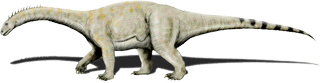
Anatomically, vulcanodontids retain a suite of primitive features while displaying the proportions characteristic of early gravisaurians. They are fully quadrupedal, with columnar but not especially robust limbs, and their vertebrae show only the faintest hints of internal hollowing. The sacrum is unusually narrow, the neck only modestly elongated, and the pelvis shows early reinforcement without the broad, weight-spreading architecture of later sauropods. At roughly 11–14 metres in length, they rank among the smallest known sauropods outside the dwarf forms of Hateg, and their overall construction remains modest but functional: a baseline sauropod design, preceding the elongation, pneumaticity, and skeletal refinement that would soon follow.
The lineage peaks in the Early Jurassic and disappears as more derived sauropods diversify across Pangaea. Vulcanodontidae leaves no descendants, but it provides a clear snapshot of the earliest gravisaurian bauplan before the dramatic anatomical innovations of the Middle and Late Jurassic.
Click here to view an A-Z list of vulcanodontids.
Etymology
Vulcanodontidae is derived from the Latin "Vulcanus" (Roman god of fire), and the Greek "odon" (tooth) and "idae" (family). It is anchored by Vulcanodon -- "Volcano tooth" -- so named because of some teeth which were found sandwiched between two lava flows near its remains. We now know Vulcanodon didn't own these teeth.
Relationships
References
• Raath MA (1972) "Fossil vertebrate studies in Rhodesia: a new dinosaur (Reptilia, Saurischia) from near the Triassic-Jurassic boundary". Arnoldia, 5: 1–2, 4.
• Cooper MR (1984) "A reassessment of Vulcanodon karibaensis Raath (Dinosauria: Saurischia) and the origin of the Sauropoda". Palaeontologia Africana, 25: 203–231.
• Hunt AP, Lockley MG, Lucas SG and Meyer CA (1995) "The global sauropod fossil record". Gaia, 10: 261-279.