



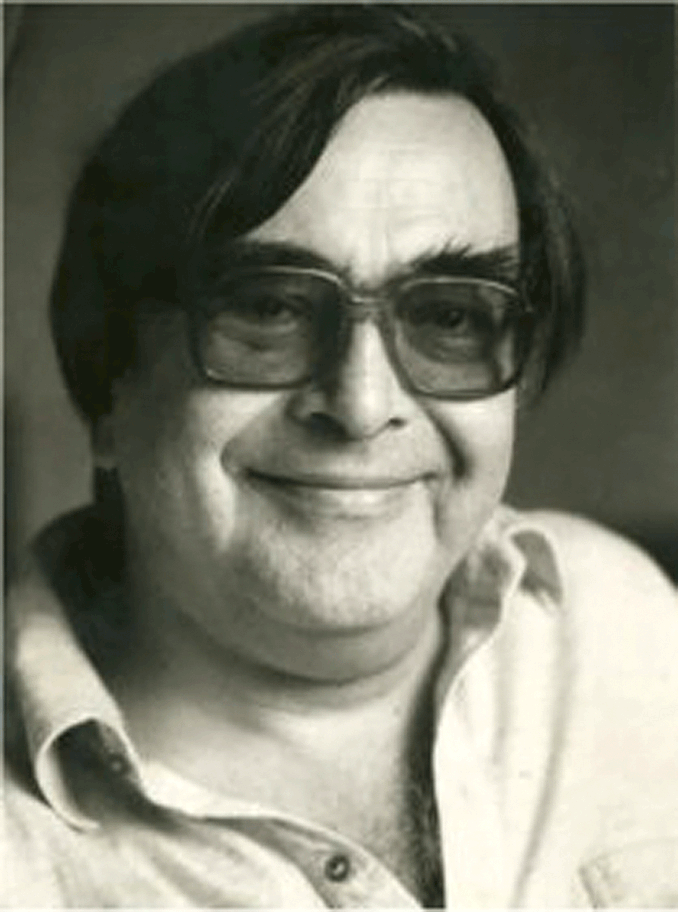
Date of Birth: August 14, 1929
Place of Birth: Buenos Aires, Argentina
Parents: ?
Spouse: (1) Flora Pasatir, (2) Estela Santilli
Date of expiry: March 13, 1992 (aged 62)
Place of expiry: Buenos Aires, Argentina
Legacy: The architect of modern South American vertebrate paleontology, and a pioneering thinker in early dinosaur and mammal evolution.
Osvaldo Alfredo Reig
Osvaldo Alfredo Reig was born 14 August 1929 in Buenos Aires, and from an early age he pursued zoology and paleontology with remarkable independence. Largely self-taught as a teenager, he gained access to scientific literature and collections through the Kraglievich family and published his first paper at sixteen. He began formal studies at the Universidad Nacional de La Plata, but political instability interrupted his degree.
Reig’s early career unfolded at the Instituto Miguel Lillo in Tucumán, where he founded the Laboratorio de Vertebrados Fósiles and directed it from 1957 to 1960, earning rapid recognition for his work on South American vertebrates. He was elected President of the Asociación Paleontológica Argentina in 1957. In 1960, during a period of military intervention in Argentine universities, he was declared prescindible ("dispensable") and forced to leave the National University of Tucumán. Exiled from Argentina’s academic system, he continued his research abroad and ultimately earned a PhD in Zoology at University College London (University of London) in 1973, completing a highly unconventional but exceptionally broad scientific training.
Reig approached science with intensity, independence, and a striking intellectual range. He moved fluidly between fieldwork, systematics, evolutionary theory, and biogeography, and he held strong views that he defended with conviction. These qualities sometimes brought him into conflict with institutions—especially during politically charged periods—but they also earned him deep respect among colleagues. Students remembered him as demanding, incisive, and inspiring, a mentor who expected rigor and believed passionately in the potential of South American science.
Reig’s contributions reshaped the study of South American vertebrates. He worked across mammals, reptiles, and early dinosaurs, and his description of Herrerasaurus ischigualastensis in 1963 became a cornerstone of research on Triassic dinosaur origins. His studies of mammalian systematics, speciation, and Neotropical biogeography were equally influential, helping establish modern frameworks for understanding South American mammal evolution.
Beyond his research, Reig played a central role in institution-building: he founded research groups, trained a generation of Argentine and Venezuelan scientists, and helped establish professional societies that strengthened the region’s scientific infrastructure. He died on 13 March 1992, leaving a legacy that continues to shape South American paleontology.
The titanosaur Bonatitan reigi is named in his honour.
Reig’s early career unfolded at the Instituto Miguel Lillo in Tucumán, where he founded the Laboratorio de Vertebrados Fósiles and directed it from 1957 to 1960, earning rapid recognition for his work on South American vertebrates. He was elected President of the Asociación Paleontológica Argentina in 1957. In 1960, during a period of military intervention in Argentine universities, he was declared prescindible ("dispensable") and forced to leave the National University of Tucumán. Exiled from Argentina’s academic system, he continued his research abroad and ultimately earned a PhD in Zoology at University College London (University of London) in 1973, completing a highly unconventional but exceptionally broad scientific training.
Reig approached science with intensity, independence, and a striking intellectual range. He moved fluidly between fieldwork, systematics, evolutionary theory, and biogeography, and he held strong views that he defended with conviction. These qualities sometimes brought him into conflict with institutions—especially during politically charged periods—but they also earned him deep respect among colleagues. Students remembered him as demanding, incisive, and inspiring, a mentor who expected rigor and believed passionately in the potential of South American science.
Reig’s contributions reshaped the study of South American vertebrates. He worked across mammals, reptiles, and early dinosaurs, and his description of Herrerasaurus ischigualastensis in 1963 became a cornerstone of research on Triassic dinosaur origins. His studies of mammalian systematics, speciation, and Neotropical biogeography were equally influential, helping establish modern frameworks for understanding South American mammal evolution.
Beyond his research, Reig played a central role in institution-building: he founded research groups, trained a generation of Argentine and Venezuelan scientists, and helped establish professional societies that strengthened the region’s scientific infrastructure. He died on 13 March 1992, leaving a legacy that continues to shape South American paleontology.
The titanosaur Bonatitan reigi is named in his honour.
References
• Reig OA (1963) "La presencia de dinosaurios saurisquios en los "Estratos de Ischigualasto" (Mesotriásico Superior) de las provincias de San Juan y La Rioja (República Argentina)". Ameghiniana, 3(1): 3–20.
• (1992) "In memoriam Osvaldo A. Reig (1929–1992)". Genetica, 85: 183–184 DOI: 10.1007/BF00132270.
• Roig VG (1992) "Osvaldo A. Reig: 1929–1992". Journal of Mammalogy, 73(4): 940-942.
• Ponsà Fontanals M (2011) "Osvaldo Reig: La Vida Itinerante de un Biólogo Evolucionista [Osvaldo Reig: the Itinerant Life of an Evolutionary Biologist]. Journal of Mammalogy, 95,(1): 187–188. DOI: 10.1644/13-MAMM-R-205.
• Farina ME (2019) "Osvaldo Reig: Un hombre de su tiempo" [Osvaldo Reig:
A man of his time]. La Ménsula, 12(31): Programa de Historia de la Facultad de Ciencias Exactas y Naturales
Secretaría General.
Discoveries and descriptions ...
| Name | Type |
|---|---|
| HERRERASAURUS |  |


